My family were the most decorated in the First World War – I retraced their footstepsNuria Cremer-VazquezWed, November 11, 2026 at 10:04 AM UTC
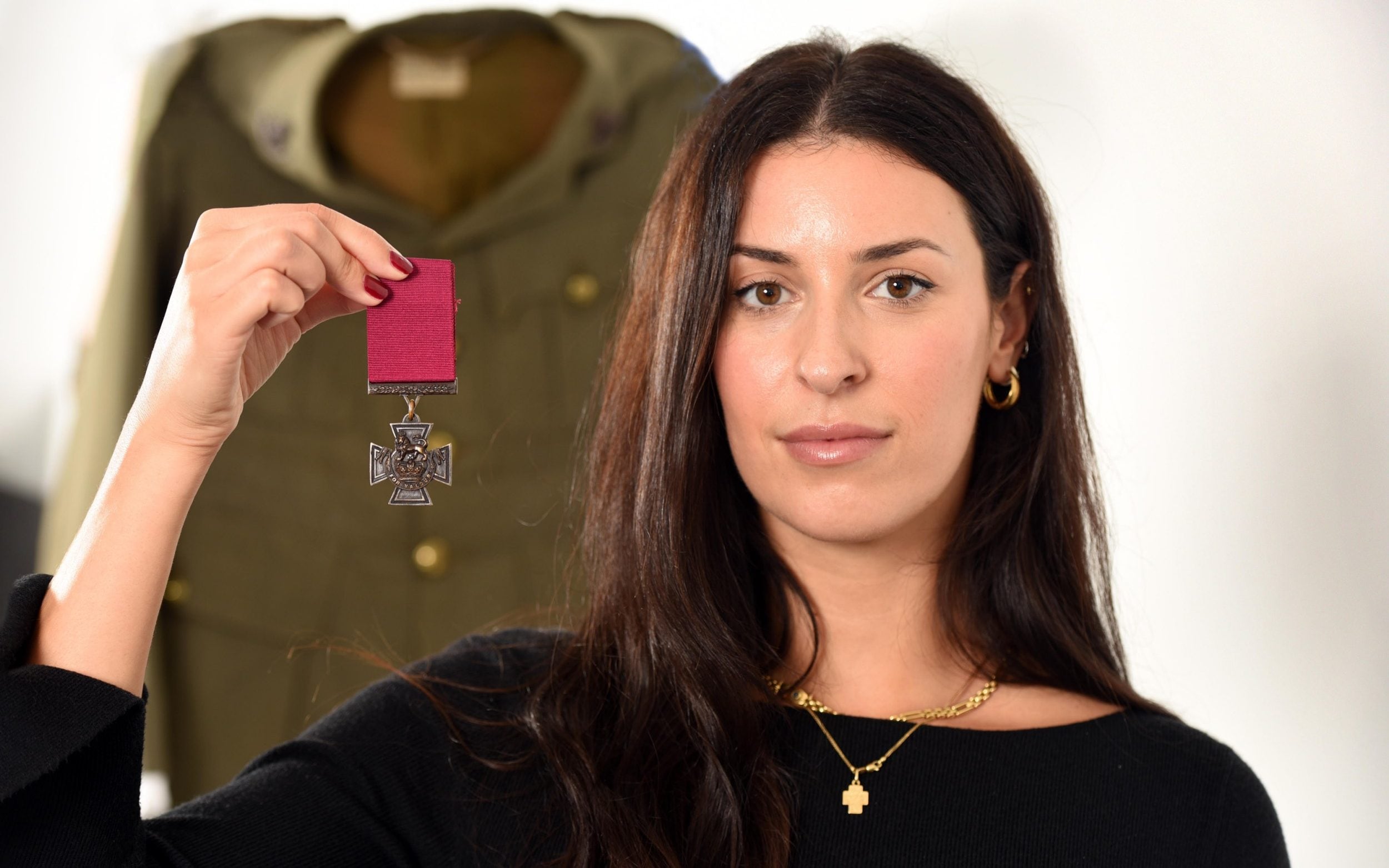
Our writer Nuria Cremer-Vazquez holds the Victoria Cross awarded to her great-uncle Roland Bradford - Asadour Guzelian
Before becoming Mrs Cremer, my great-grandmother was a schoolgirl named Amy Bradford. She had four older brothers who doted on her and called her “Baby” or “Ginger”. When war broke out in 1914, all four left home in Co Durham for the Western Front. Only one would come home.
Their mother – my great-great-grandmother – went to Buckingham Palace after the war to be presented with a medal for one of her sons by King George V. It was her third visit, however, and when she stepped forward, the king is said to have remarked: “What, you again?”
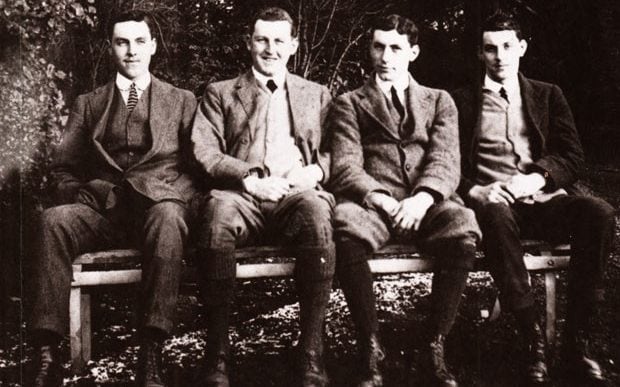
The Fighting Bradfords – (left to right) Roland, Thomas, George and James – were the most decorated siblings in the First World War
Thomas, George, James and Roland became known as the “Fighting Bradfords”, the most decorated family of the First World War. Between them, they were awarded two Victoria Crosses (VC), two Military Crosses (MC) and one Distinguished Service Order (DSO), with George and Roland being the only siblings in the war to receive the VC. Twenty days before his death, aged 25, Roland was promoted to Brigadier-General. To this day, he remains the youngest officer to hold a General rank in the history of the modern British Army.
“Uncle Tommie” was the sole survivor, and as he had a son but no grandchildren, he asked Amy to ensure that their brothers were not forgotten. She kept Bradford as a family middle name and passed their stories, photographs, letters and belongings down to the rest of us. Their portraits and “death pennies” hang above our staircase, while my increasingly eccentric father sleeps with George’s naval officer’s sword under the bed in case of intruders.
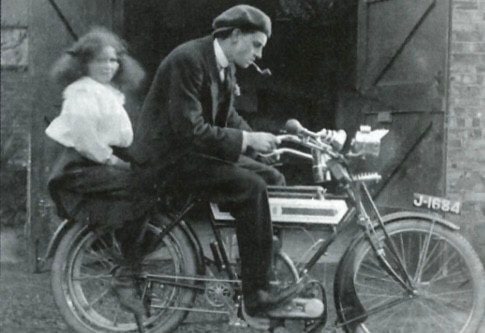
Amy Bradford, our writer’s great-grandmother, with her brother James two years before the First World War broke out
Over the decades, several of my relatives have visited the brothers’ resting places in Belgium and France. It has become a family pilgrimage of sorts – and one I finally decided to make this year. Accompanied by my dad, his memories of Uncle Tommie and books dense with military reports and trench maps, I crossed the Channel to retrace the steps of my great-great-uncles.
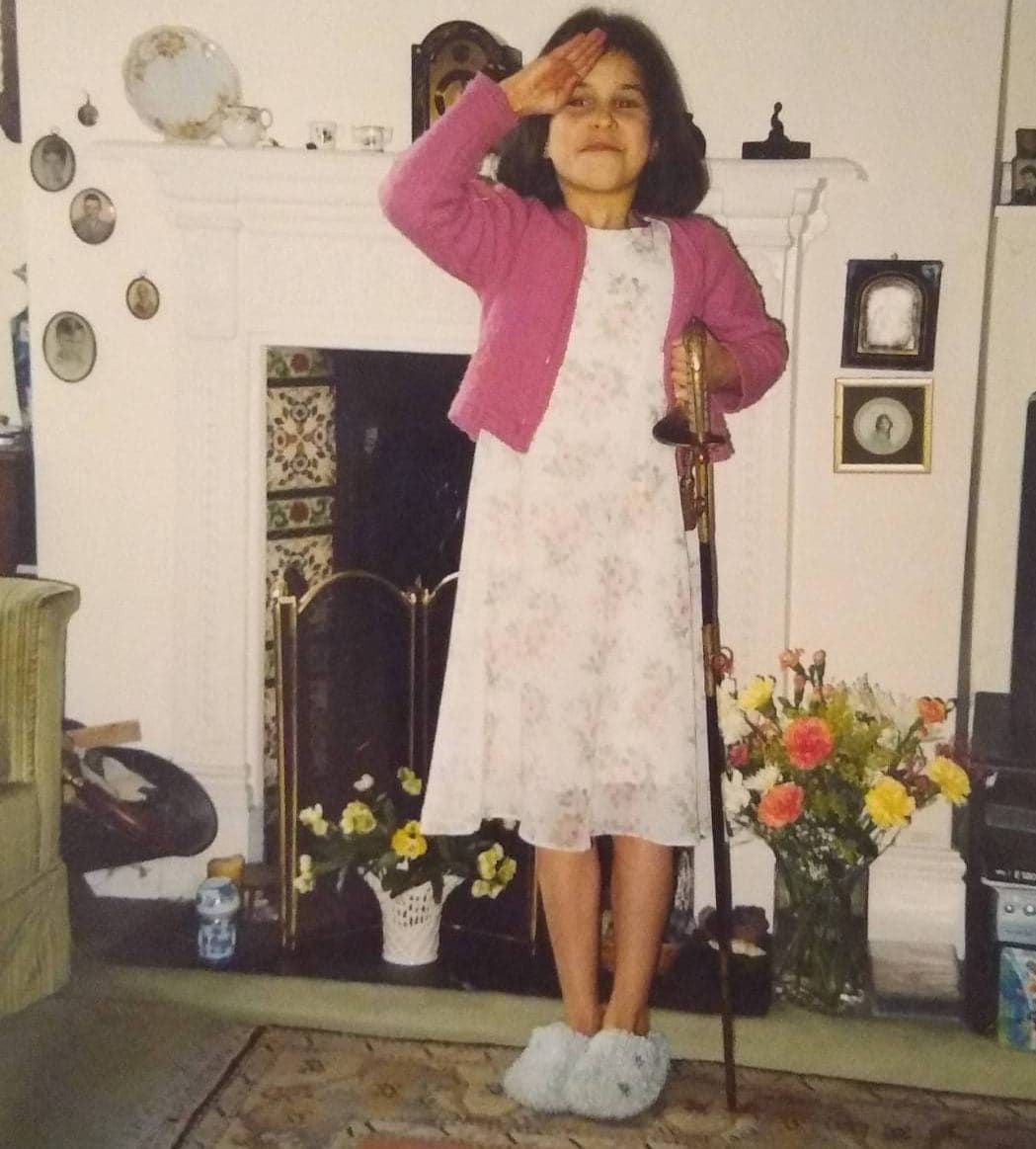
Our writer poses as a child with her great-great-uncle George’s sword - Nuria Cremer-VazquezJimmie’s story
Our journey began in Arras, a chocolate-box town in northern France. Its bistro-lined squares and flamboyant Flemish architecture are, of course, all 1920s reconstructions, as shelling had already reduced the town to ruins by the time James Bradford arrived with the Durham Light Infantry (DLI) in April 1917.
“Jimmie” was, by all accounts, the quietest of the brothers. A keen musician and lover of horses, he had survived the Somme’s bloody first day before gunshot wounds sent him on convalescent leave, during which he married. After returning to the Somme, the young 2nd Lieutenant earned the MC for leading the capture of an enemy trench, though by the time he learnt of the medal, he would be in the Arras sector.
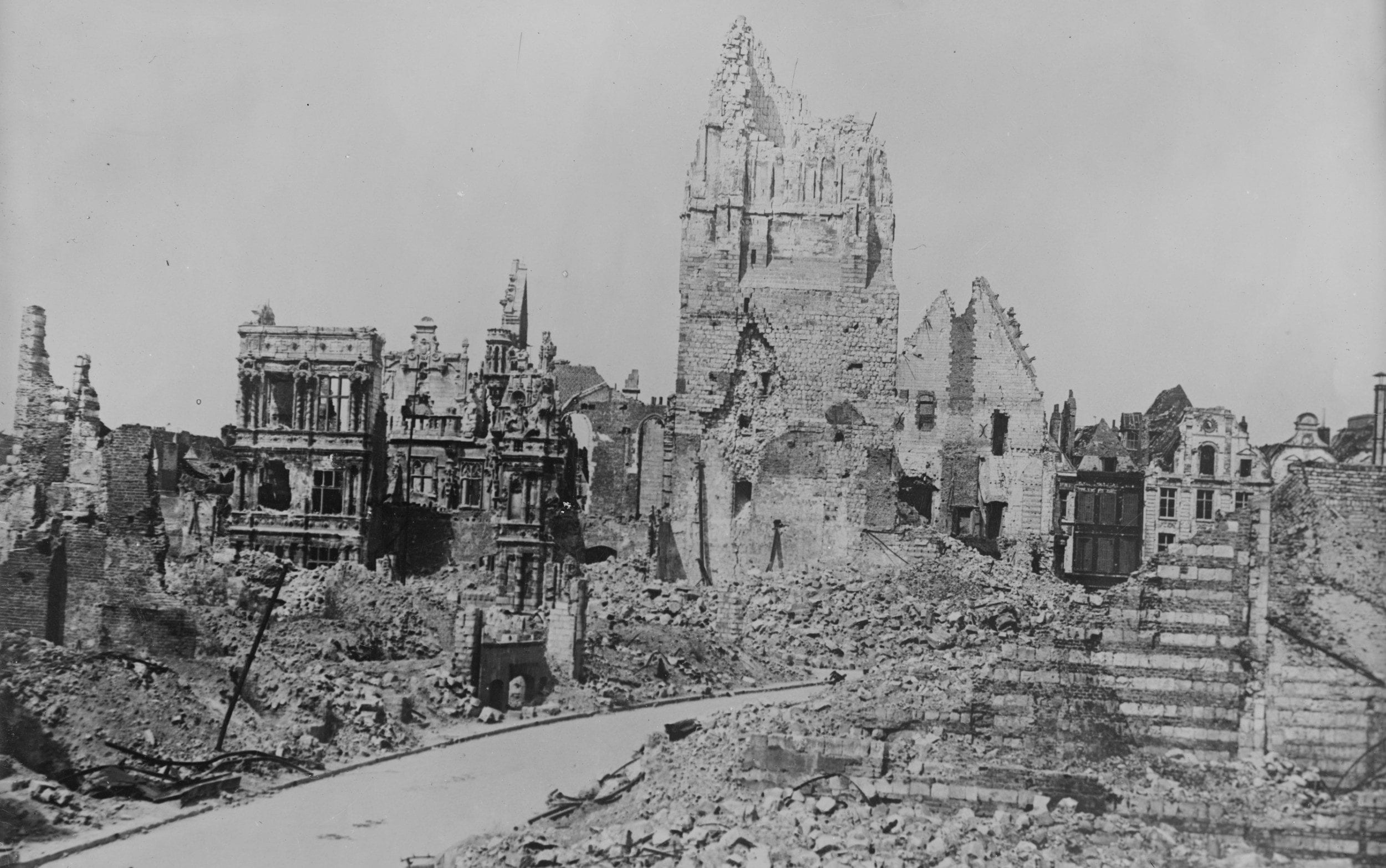
The town of Arras already lay in ruins by the time James ‘Jimmie’ Bradford arrived in 1917 - Getty/Heritage Art/Heritage Images
To find the scars of the Arras offensive today, we had to go underground. The Carrière Wellington is a 12-mile tunnel network dug up to the German line from which Allied troops launched a surprise attack. It housed 24,000 British soldiers before the battle, and while Jimmie was stationed above ground, we know that his younger brother Roland spent a week in these cold, clammy chambers. They still bear traces of the soldiers: drawings of women etched on to the limestone walls and left-behind bottles of HP sauce.
Jimmie, 27, was wounded again on May 10, 1917, and died of his injuries four days later at a casualty clearing station, having been married for only a few months.
There are more than 130 Commonwealth cemeteries within 10km of Arras alone. We visited Jimmie’s grave at Duisans, where the pristine poppy wreath bearing the DLI crest that rested against his headstone told us that others had been in recent days.
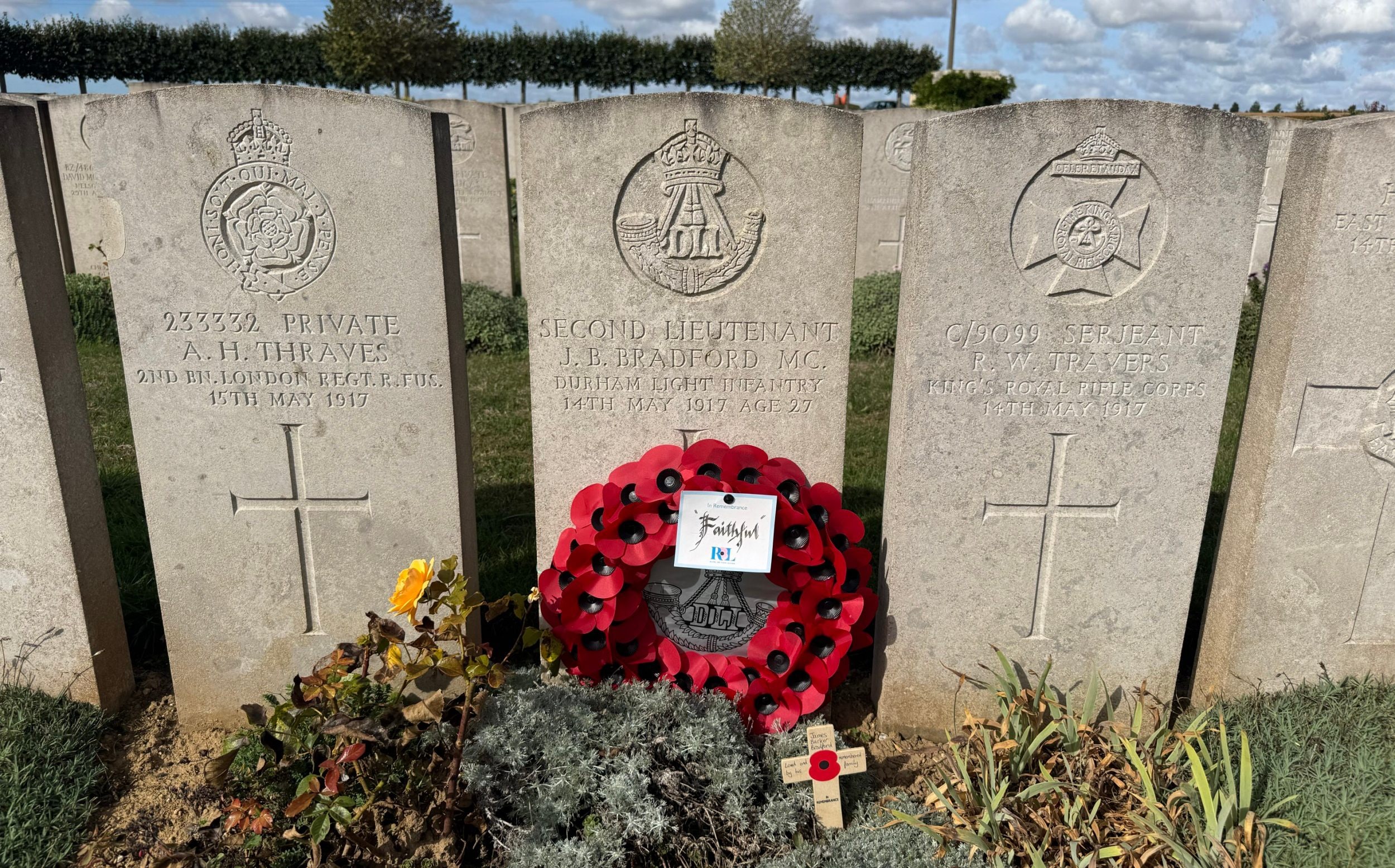
A pristine poppy wreath rests on Jimmie’s grave - Nuria Cremer-VazquezRoland’s story
Like his brother, Roland fought at the Somme with the Durhams, albeit in a separate battalion. Impish, slightly stubborn and an avid reader of Shakespeare, he rose rapidly through the ranks thanks to a military nous beyond his years and a care for his men that earned their absolute loyalty. Field Marshal Douglas Haig called Roland “an officer of outstanding talent and personality”. He set up a battalion band and football league, and would swap his officer’s hat for a steel helmet to address his troops “properly dressed”.
One of the most contested spots on the Somme was little more than a chalk mound about 16 miles from Arras. Surrounded by sugar-beet farms, the 50ft-high Butte de Warlencourt is hardly an eye-catching landmark today, but its elevation earned it the nickname “little Gibraltar” back then. In November 1916, Roland led an advance through knee-deep mud and heavy fire, taking the German-held mound before a counterattack overwhelmed his men.
The path to its crest is scattered with signs warning of unexploded ordnance, and we eventually reached an information board bearing Roland’s photograph. Trench map in hand, I could make out where he would have gone over the top.
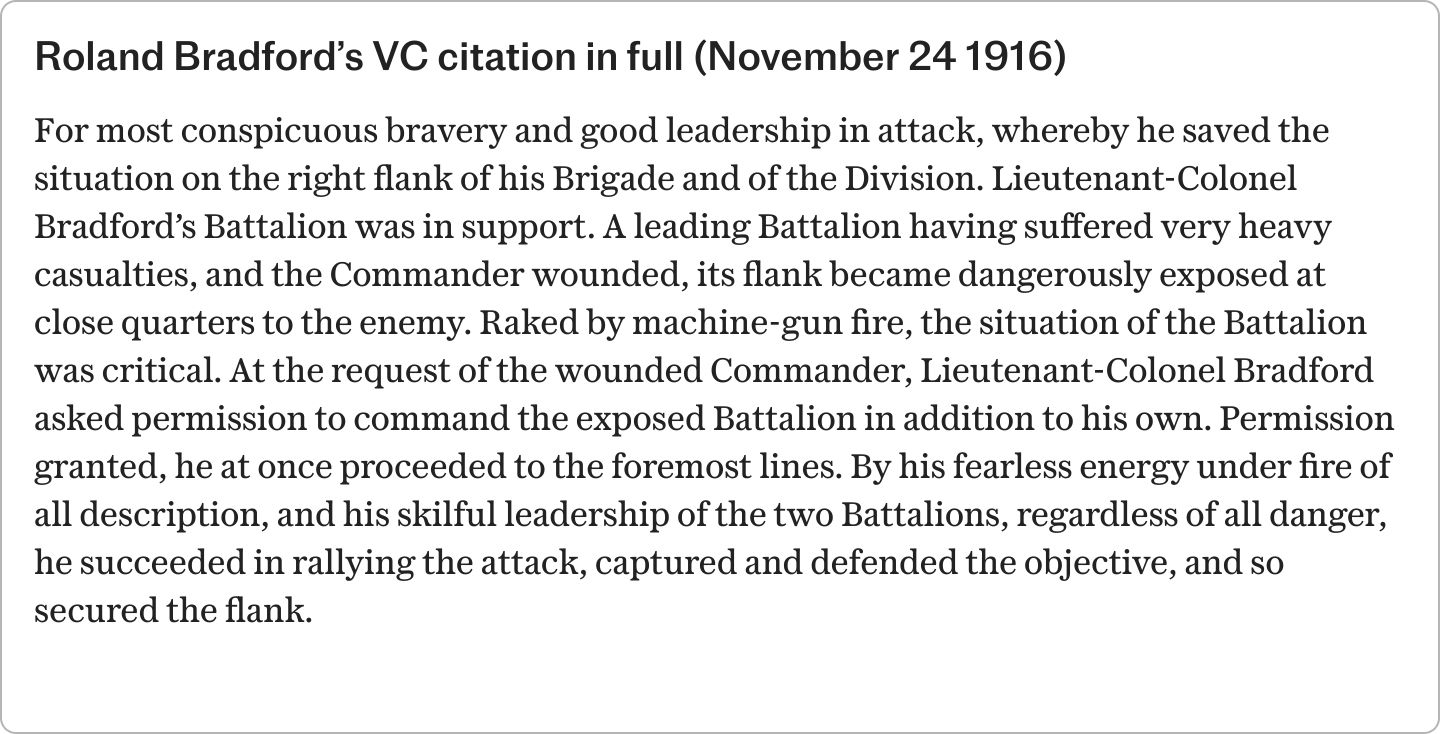
Shortly after the defeat, Roland learnt he was to receive the VC for his actions weeks earlier. At Eaucourt l’Abbaye on October 1, 1916, he was leading his own battalion when another’s commander was wounded. Without hesitation, and “under fire of all description”, 24-year-old Roland took command of both battalions himself.
The following morning, we made for Cambrai, by which time we had become accustomed to driving through a landscape peppered with gleaming graveyards and memorials. Reminders of the war come at every turn: at Thiepval, at Vimy Ridge or, for local farmers, with the shrapnel – the “iron harvest” – that still emerges from the soil.
Cambrai is home to one of the most remarkable discoveries. Deborah, an intact 28-ton British tank, was found by local historian and hotelier Philippe Gorczynski, an expert on the Battle of Cambrai. It is now displayed at the Cambrai Tank 1917 Museum.
Gorczynski regularly shares his encyclopaedic knowledge of the battle with people tracing family members. “You cannot believe how happy it makes me to bring somebody information about their relative,” he said. “Once, I was able to provide someone with a bit of the exact tank his grandfather fought in.”
Roland was promoted to Brigadier-General in November 1917 and sent to Cambrai to command a brigade in what would be the world’s first great tank battle. On the 30th, he was killed by a shell. His Major-General later wrote: “He was a very exceptional man, though only a boy.”
Gorczynski pointed towards a row of trees outside the museum. “It happened over there,” he said. “I have visited his grave many times.”
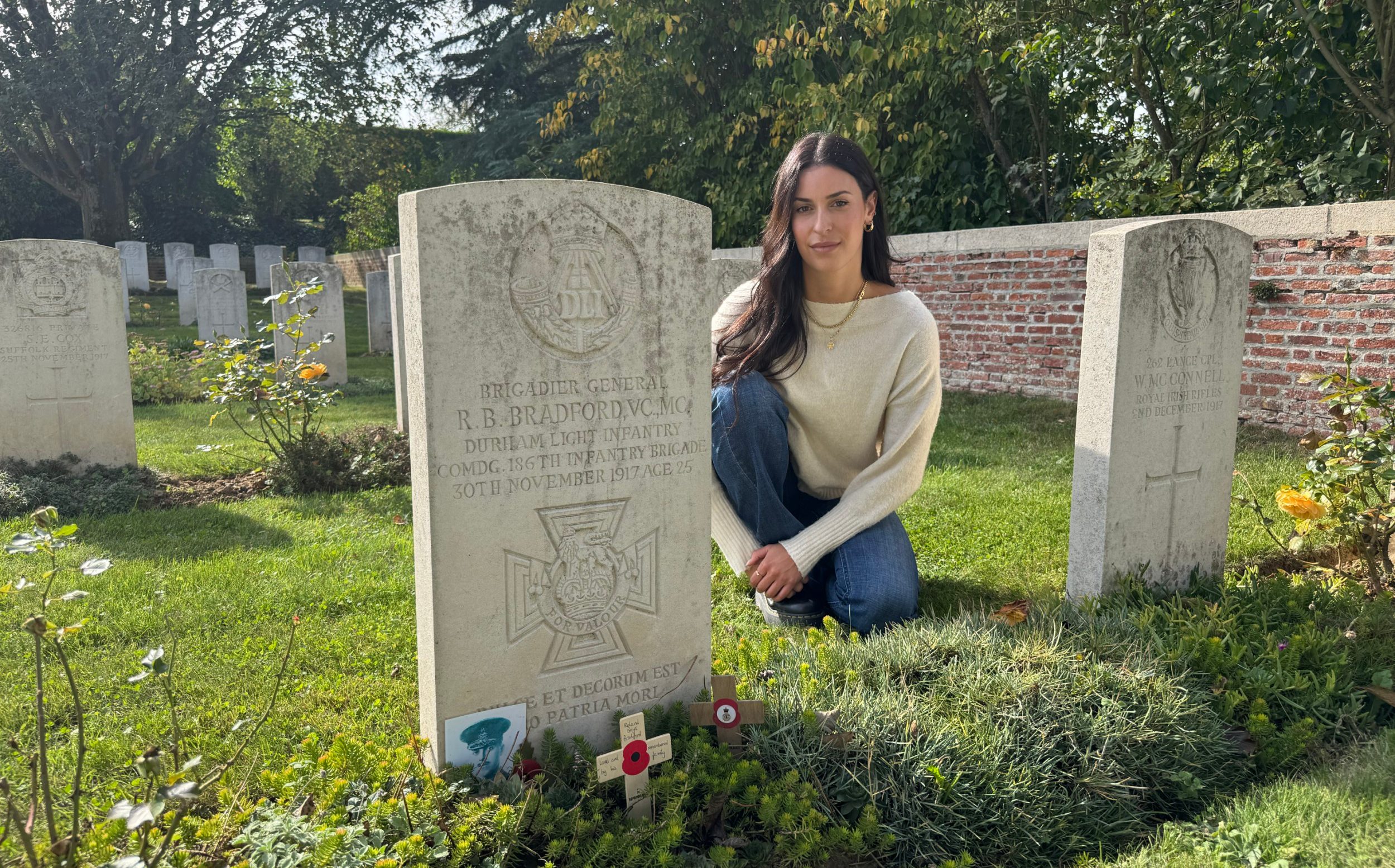
Our writer beside her great-great-uncle Roland’s grave at the Hermies cemetery - Nuria Cremer-Vazquez
The visitors’ book at Hermies cemetery, where Roland is buried, read much like those elsewhere in this part of France, with messages from people roaming the rectangles in search of a great-great-someone. But every few entries, one scribble recurred: “Came to visit the Boy General.”
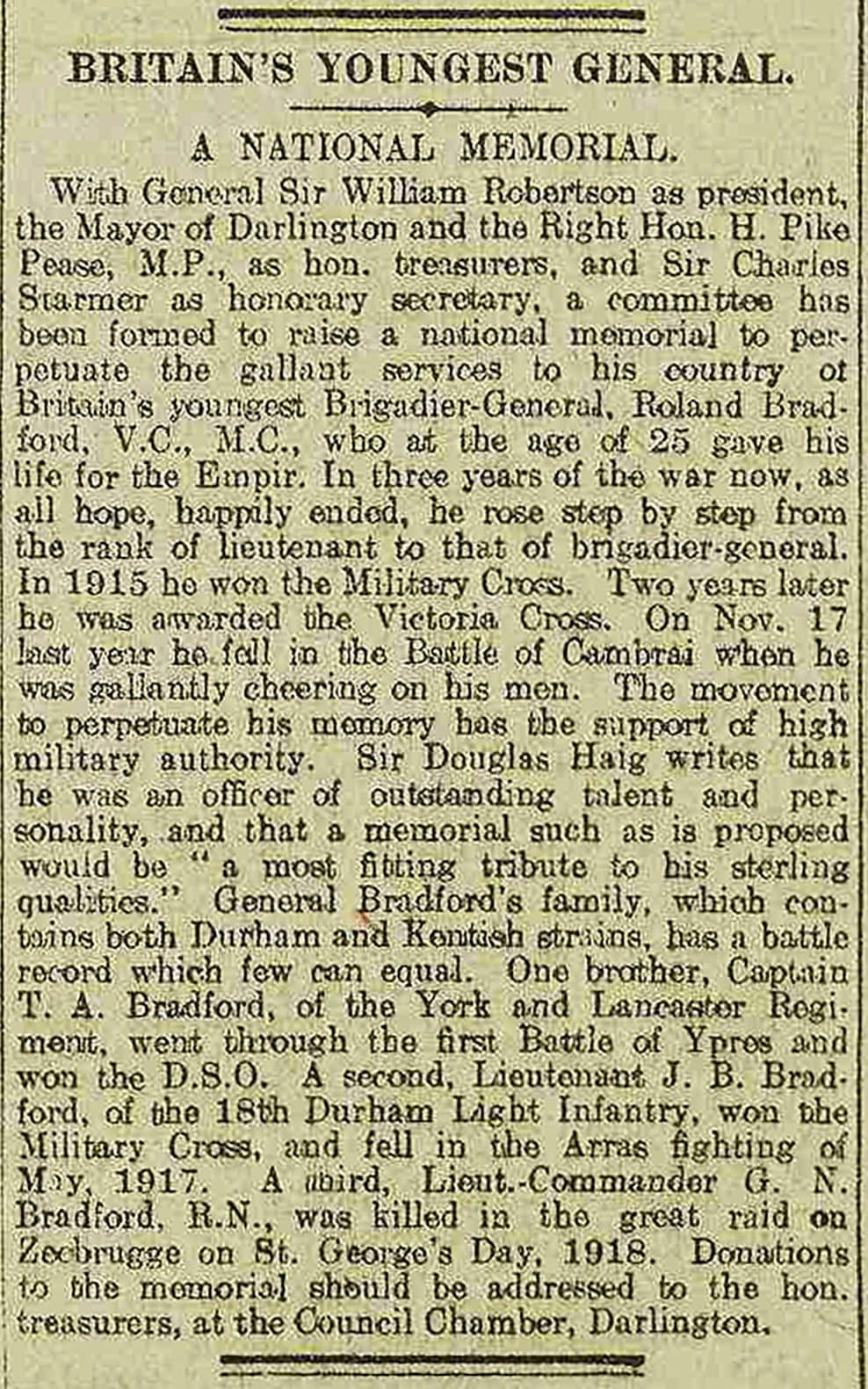
A Telegraph newspaper clipping on plans to create a memorial for Roland, ‘Britain’s youngest general’ (Nov 13, 1918) - The Daily TelegraphTommie’s story
On the drive to Ypres, my dad reflected on a memorable Christmas Day spent with Uncle Tommie during which the stove had been left on, and he accused the family of trying to gas him.
Tommie had been flung into one of the most harrowing theatres of war on his first day at the Front. On April 22, 1915, the first poison gas attack in the history of warfare took place at the Second Battle of Ypres, and his DLI company was sent to relieve the few survivors. They were met by the lingering stench of chlorine gas and many dead bodies as they came under attack from three sides.
The farm where this happened lies two minutes from Tyne Cot, the world’s largest Commonwealth cemetery. It’s just one of many cemeteries visible from the belfry in Ypres’s main square, which also looks over the Menin Gate. I looked down at the busy streets which, by sundown, would fall silent save for the sound of the Last Post.
Tommie was awarded the DSO for his gallantry at Ypres and received two of the Bradford brothers’ three Mentions in Despatches. He would later be knighted, in 1939. Yet he would refer to himself as the “coward of the family” for surviving.
We travelled towards Bruges and the war tourists disappeared. “[Bruges] was way behind the German lines, so it doesn’t receive anything like the visitor numbers of the [Flanders] battlefields,” says Jeremy Banning, a military historian and tour guide who runs Cycling the Battlefields. “But I did visit George’s grave with a group many years ago.”
George’s story
George was the only Bradford brother not to enlist with the DLI. He joined the Navy, becoming its welterweight boxing champion and fighting at Jutland aboard HMS Orion. In 1918, he stepped forward to take part in the naval raid on Zeebrugge – an operation considered so high-risk that the decision was made to use only volunteers.
The canals of Bruges are awash with holidaymakers, but in 1918 the city was home to the Germans’ U-boat base, with the canal network providing access to the port of Zeebrugge. The Royal Navy’s plan was to sink three British cruisers at the mouth of the port to block the U-boats from reaching the English Channel.
On April 23, 1918, George commanded the storming parties aboard HMS Iris II. As the ship approached the mole – Zeebrugge’s mile-long breakwater – rough seas sent her crashing and surging. Ladders shattered, and men attempting to secure her with anchors were shot down. George grabbed a parapet anchor, climbed the ship’s derrick and leapt on to the mole. As he secured the anchor, he was riddled with machine-gun bullets and fell into the sea. It was his 31st birthday, and St George’s Day.
The citation for George’s posthumous VC called his action one of “absolute self-sacrifice”. But the medal would have been of little consolation to my great-great-grandmother, who had lost three sons within a year.
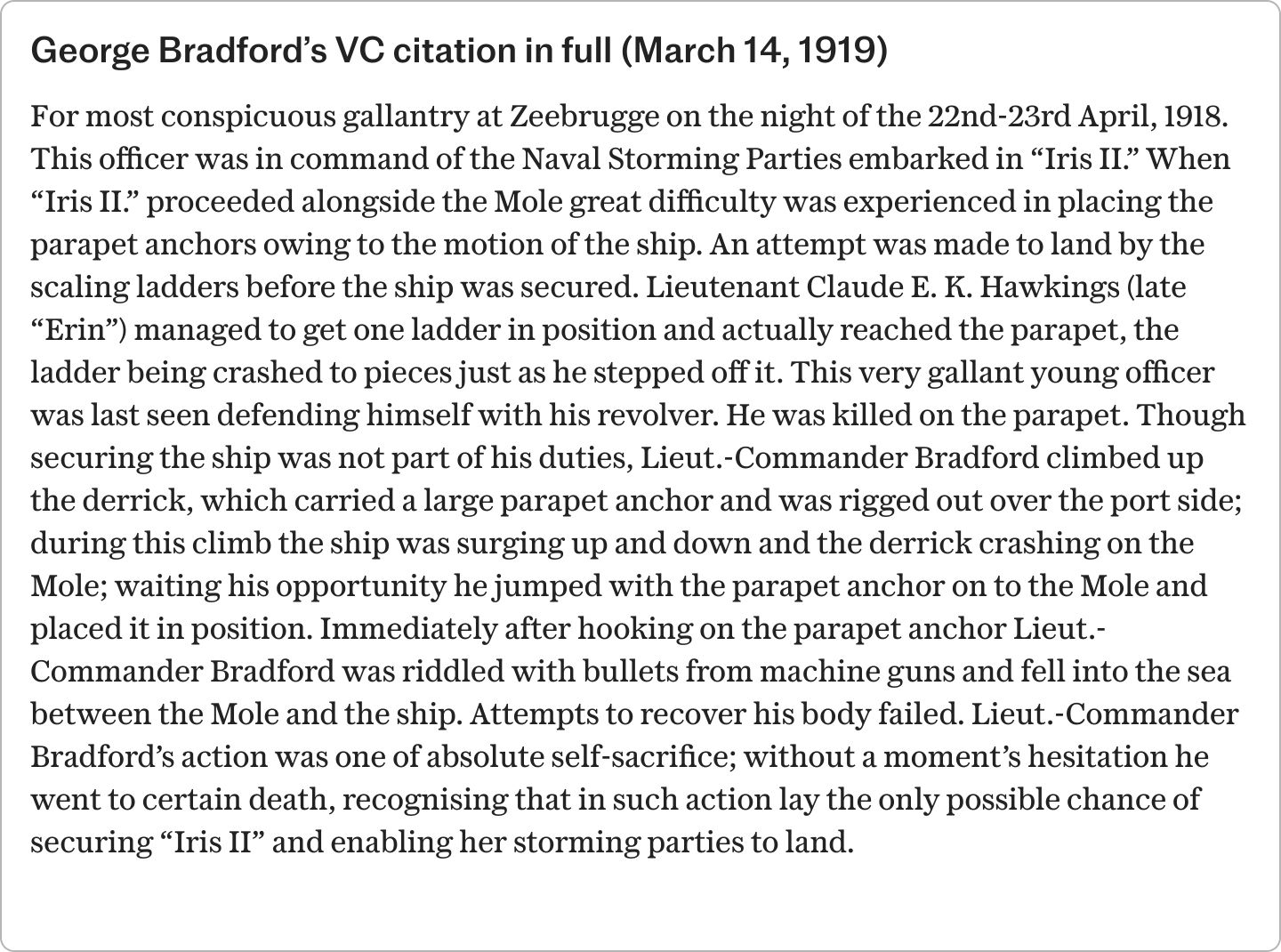
My dad had heard rumours of a plaque commemorating “Georgie” in Zeebrugge, but we failed to find it. George’s body washed up a few days after his death, at Blankenberge, where the Germans buried him in the local cemetery. His is one of 10 First World War graves in a small, pearly corner of the graveyard. As with James and Roland, someone had already left a poppy cross.
It was almost time to make the journey home that so many never did, but we decided to first stop at Blankenberge’s famous pier. The sun had appeared and the North Sea no longer looked quite so grim. On the pier, we spotted three people reading a tall stone column beside a flower bed, and as they moved away, I saw a face I had passed every time I climbed the stairs. The rumours of the memorial had been geographically muddled, but true.
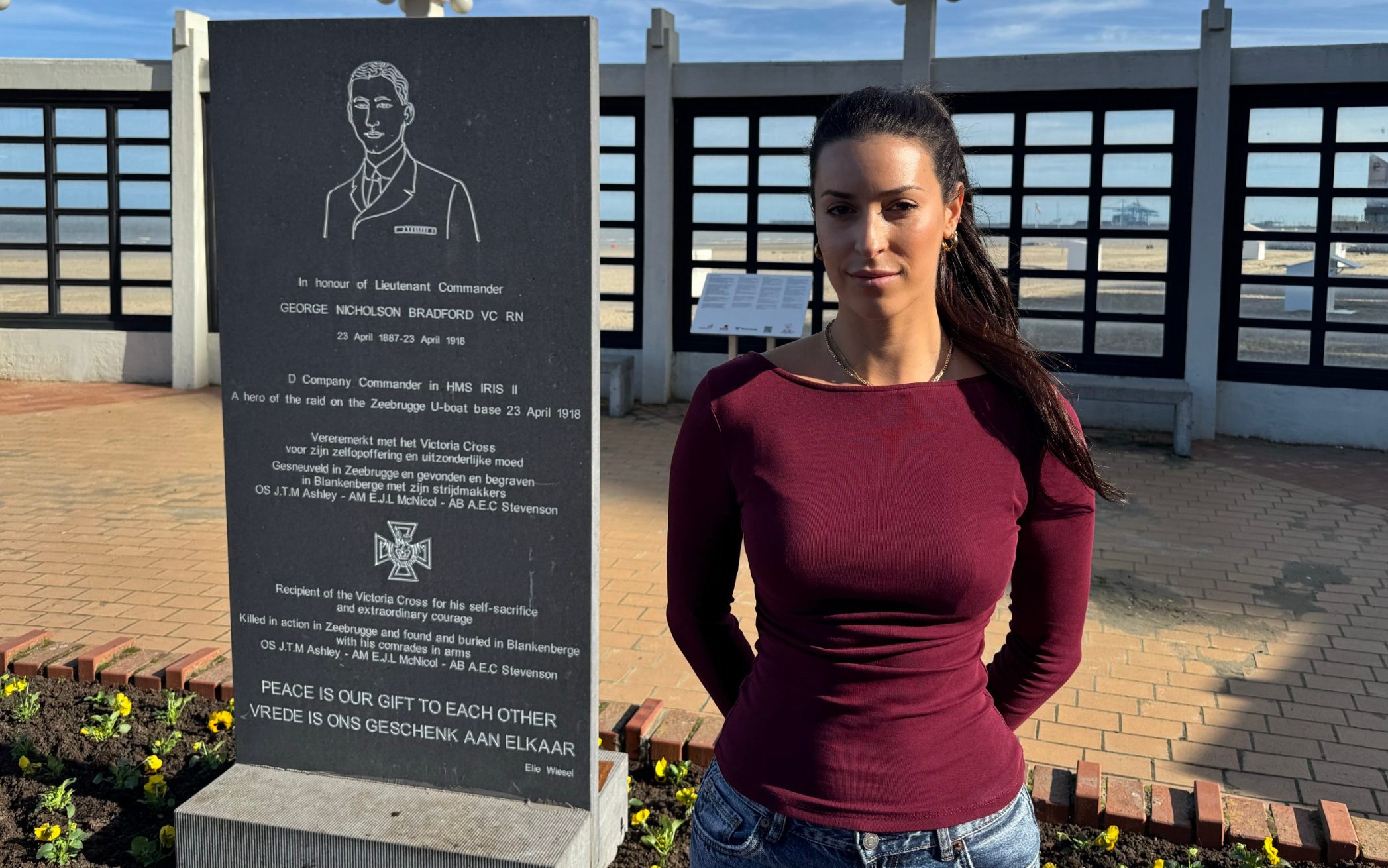
Our writer found a memorial to George on Blankenberge pier
I have long thought it tragic that the four brothers, who are always spoken about as one, ended up buried alone and, bar Tommie, so far from those who missed them. But each place we went bore the traces of people who had made the trip to visit them just as we had. We met people who spoke about them with familiarity, and had seen their faces looking out at us from hilltops and seashores.
I thought how glad Roland would be to stand on the Butte and see sugar beet instead of shell holes; how pleased Jimmie would feel to see grazing horses outside Arras; how contented George would be to see couples strolling along Blankenberge pier. And how grateful Tommie would feel to see just how many people have not forgotten him or his brothers.
How to do it
P&O Ferries operates 22 sailings a day between Dover and Calais. Tickets cost from £13.50 per adult (foot passengers) or £114 per car each way.
The Hôtel Les Trois Luppars in Arras occupies the town’s oldest building, which dates back to 1467 and was the only house on the main square to survive First World War shelling. Rooms from around £67 per night with breakfast.
The Crowne Plaza Hotel, Bruges, sits right on Burg square and offers excellent views of the ornate Stadhuis, with rooms from £178 per night. Read a full review here.
Durham museums The Story and The Light (previously the Durham Light Infantry Museum) both display collections belonging to the Fighting Bradfords.
Source: Crime



0 Comments